Caspio: Full Review & Alternatives (2026)
A long-running low-code platform for secure online database applications and business portals.
Visit Website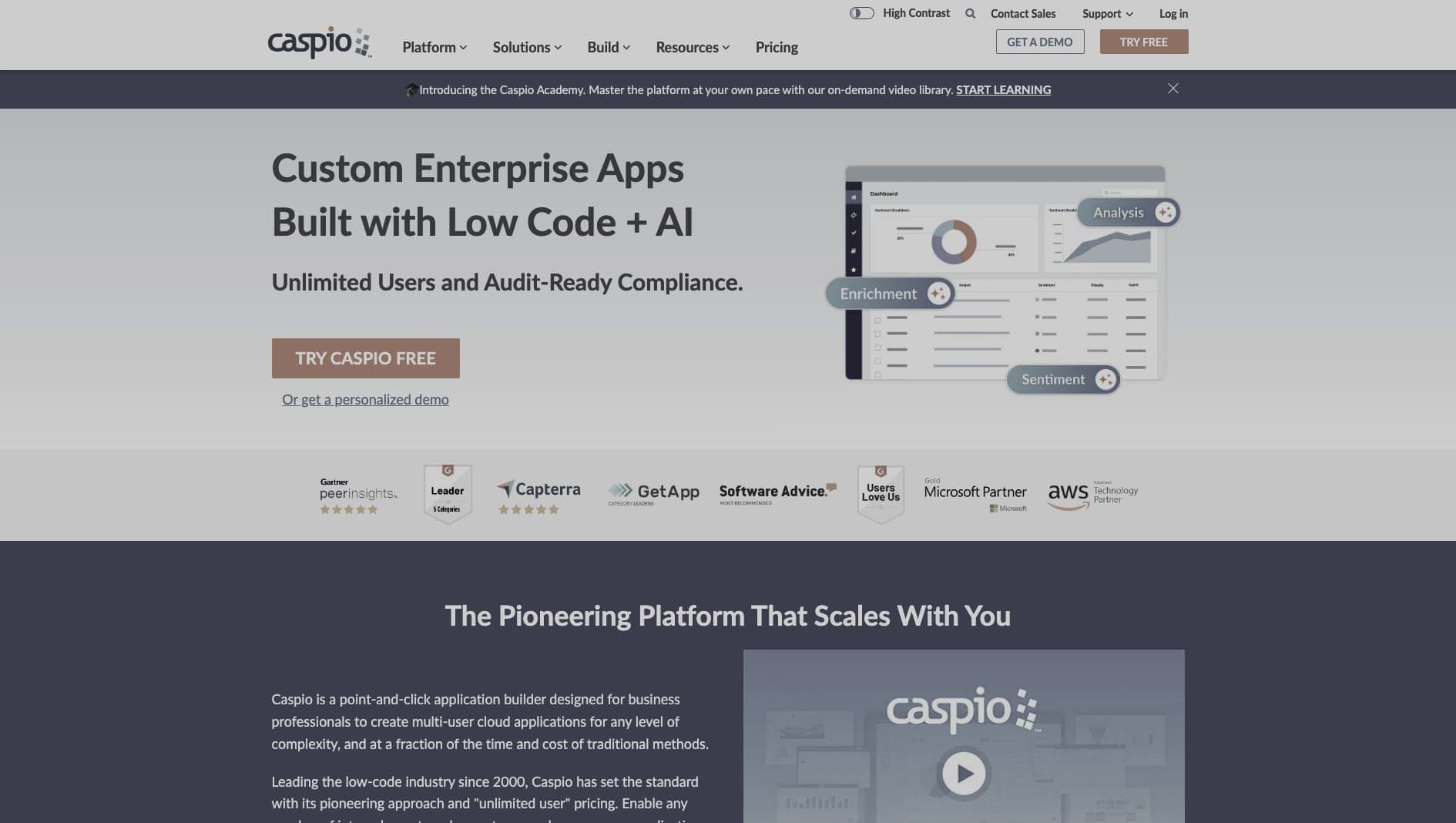
Key Features
Database Apps
Build web apps around structured business data.
Integrations
Connect business systems, external services, and reporting workflows.
Compliance
Support regulated use cases with security and governance controls.
Pros & Cons
What we love
- Strong security and compliance options
- Unlimited users on all plans
- Handles large business datasets
Where it falls short
- Interface can feel dated
- Very expensive
Detailed Review
Caspio has been around for a long time, and it shows in both good and bad ways. It is mature, security-focused, and well suited to database-backed business applications, especially in organizations with compliance or governance requirements.
Teams use Caspio for portals, reporting apps, searchable databases, and operational systems where the data model matters more than a modern design experience. Unlimited-user pricing on some plans can also be attractive for public or broad internal access.
The product can feel dated compared with newer builders, and it is not the best choice for highly polished consumer interfaces. Caspio is strongest when reliability, data handling, and compliance are more important than visual flair.
Frequently Asked Questions
Is Caspio good for beginners?
Yes, but it is most approachable for users who are comfortable thinking in databases, forms, and reports.
Can I move data out of Caspio?
Caspio provides data access and integration options, but teams should confirm migration needs before building a critical app around it.
Who should consider Caspio?
Caspio is worth considering for database-heavy business apps, regulated workflows, and portals where security matters more than modern visual polish.